
Divorce and Mental Health
Whether you’re initiating the divorce or your spouse has informed you of their intention to end the marriage, divorce and mental health are closely linked. Divorce is often preceded by distressing or unhealthy circumstances, and although it may ultimately bring relief, it can still take a significant emotional toll. Both spouses—and often extended family—may struggle with the psychological impact.
At Rickards Law, we understand the legal and emotional challenges that come with divorce. For more on how we support clients emotionally and legally, visit our page on New Jersey family law services. Below are several strategies to help protect your mental health through this process.

Changing Relationships and Mental Health
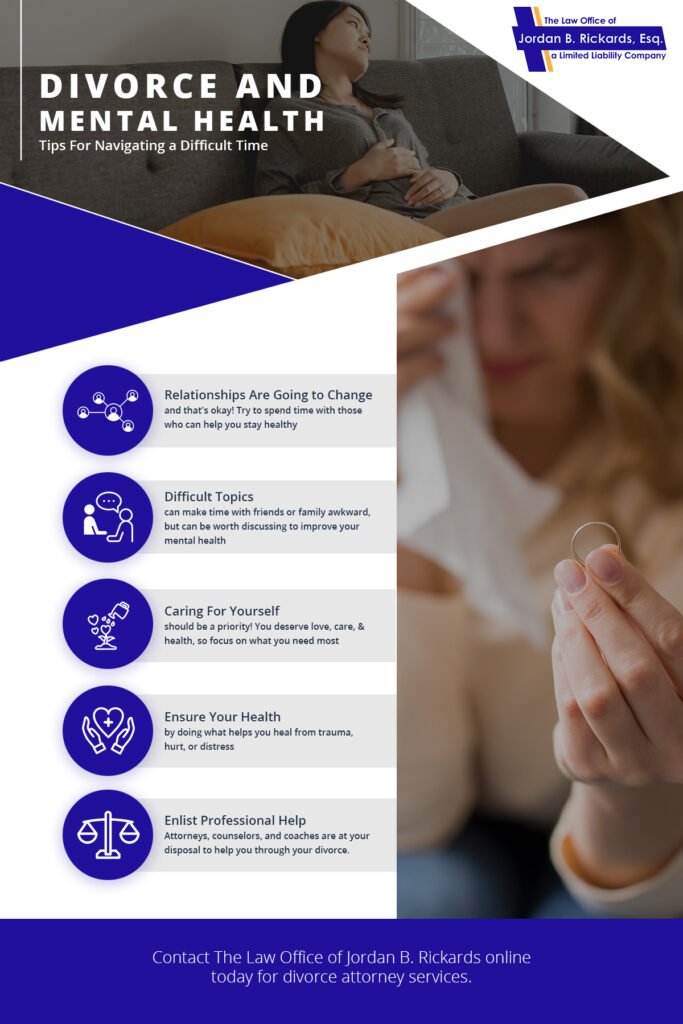
Major shifts in close relationships can affect your emotional well-being. Even if you want the divorce, adjusting to new roles and routines can be difficult. You might need to take on new responsibilities or manage different expectations from family and friends. Spending time with trusted loved ones can help reduce stress and maintain your mental health during divorce.

Handling Difficult Conversations During Divorce
Many divorces involve tough conversations. Talking with your ex-spouse or explaining the situation to your children can feel overwhelming. You don’t have to get everything right. Focus on being honest, respectful, and emotionally open. This approach can ease tension and protect your mental health through divorce-related discussions.

Prioritizing Self-Care During Divorce
Protecting your mental health means taking care of yourself. That may involve seeing a therapist, taking a short break from work, or engaging in hobbies that bring peace. What works for one person might not work for another. The key is to recognize your emotional needs and respond to them with kindness and attention.

Supporting Long-Term Mental Health
There is no single path to healing. Some people benefit from therapy to address trauma or unresolved pain. Others find comfort in building stronger relationships outside the marriage. Try different approaches until you discover what helps you most. Long-term mental health after divorce is not just possible—it’s achievable with time and support.
For additional support, the National Alliance on Mental Illness offers helpful advice for those navigating emotional recovery.
If you’re facing a divorce and want legal help that also understands the emotional toll, contact our New Jersey divorce team today. We’re here to guide you through the legal process and support your overall well-being.
Contact Us